Barcelona’s Mobile World Congress 2026: AI Phones, Open RAN and the Battle for 6G Leadership
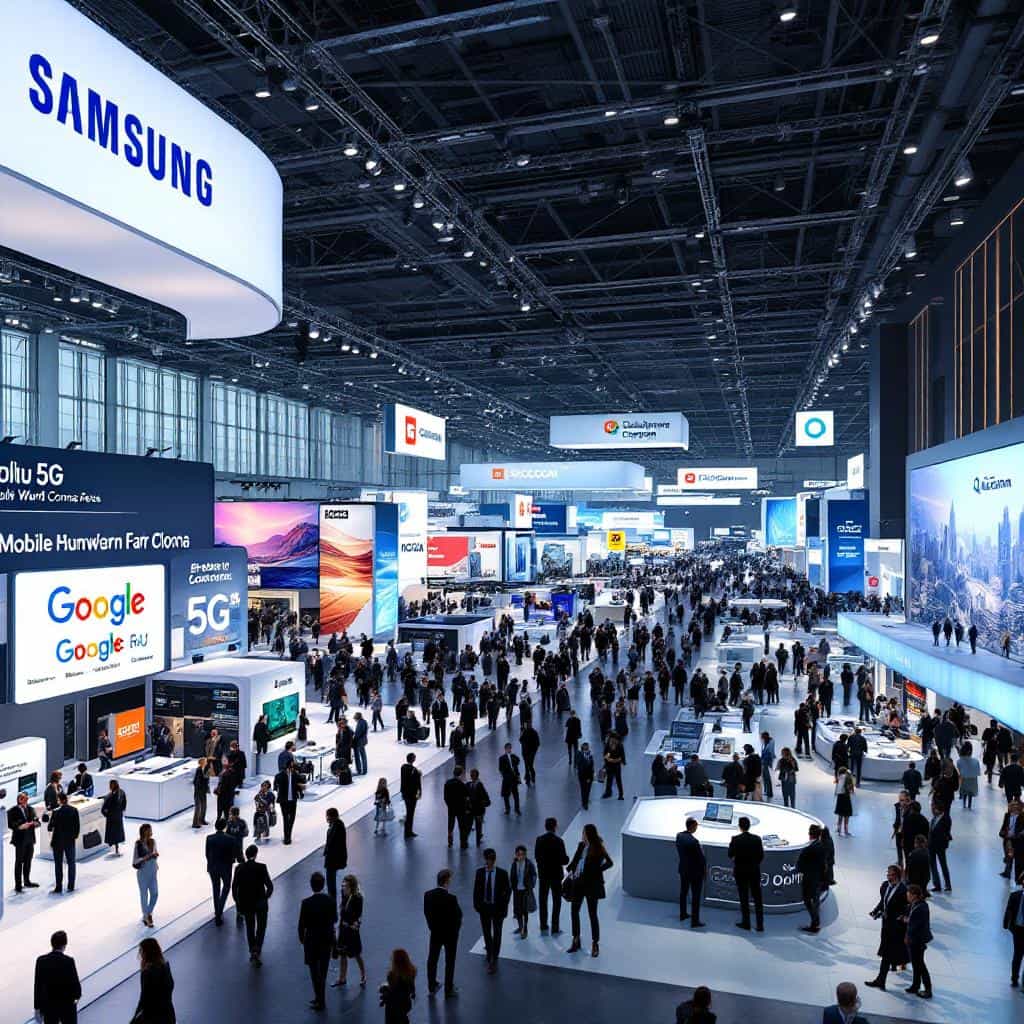
The 2026 edition of Mobile World Congress in Barcelona confirmed what the industry has suspected for years: the smartphone is no longer just a communications device, but the user’s primary interface to a pervasive, AI‑driven, cloud‑anchored universe. As more than a hundred thousand participants flooded the Fira Gran Via halls, one theme resonated across the booths of network equipment makers, chip giants, device manufacturers and cloud platforms: intelligence everywhere and connectivity for everything. While previous editions had been dominated by 5G deployment timelines and incremental device updates, MWC 2026 crystallized a transition toward AI‑centric design, 6G experimentation and a new wave of satellite and non‑terrestrial networks, with all the major companies competing to define the standards, services and business models that will shape the rest of the decade.
Samsung arrived in Barcelona determined to defend its image as the most versatile Android powerhouse in a market where device innovation can feel incremental from one year to the next, and the company doubled down on foldables, generative camera features and device‑to‑cloud integration. Its stand, one of the largest at the show, revolved around an AI layer embedded from the chipset to the user interface, promising real‑time translation, on‑device content creation and context‑aware power management that claims to extend battery life by learning individual habits, and Samsung also showcased its latest Galaxy foldables with improved hinge durability and a brighter, more energy‑efficient display, positioning them as viable productivity devices rather than niche fashion statements. Company executives referenced the early days of the smartphone, recalling how skeptics dismissed large‑screen phones as unwieldy, and argued that foldables will follow a similar trajectory, becoming mainstream as production scales and software adapts.
Apple, traditionally absent from trade shows like MWC and known for running its own carefully choreographed launch events, was technically not exhibiting in the classic sense, yet the company’s presence was felt through a tightly controlled series of closed‑door briefings with operators, infrastructure partners and enterprise customers in nearby hotels and private meeting spaces. This more discreet participation nevertheless carried strategic weight, because operators remain keenly interested in Apple’s roadmap for satellite connectivity, eSIM evolution and network APIs that could enable new services such as quality‑of‑service tiers for immersive applications and enterprise‑grade private networks that mesh tightly with iOS devices. Industry insiders in Barcelona noted that Apple’s quiet consultations around radio energy efficiency and spectrum usage were reminiscent of its early work on VoLTE adoption, a time when the company quietly pushed carriers to revamp their networks to support iPhone‑driven use cases, and analysts speculated that Apple is already aligning with select partners on features that may appear in iOS and future iPhone models closer to the early 6G rollout window.
Google, by contrast, used the full spectacle of MWC 2026 to highlight its dual role as both the steward of Android and a cloud‑AI behemoth aggressively courting telecom operators and device makers. Its booth combined live demos of the latest Android version running on partner devices from Xiaomi, OPPO, OnePlus and others, with a dedicated area for Google Cloud’s telco solutions, including network data analytics, automated operations and exposure of network capabilities via standardized APIs. Google executives argued that the next wave of innovation will come less from raw bandwidth and more from the ability to program networks and devices using AI, drawing a parallel with the rise of app stores in the late 2000s, when giving developers access to sensors and notifications transformed smartphones into platforms. In Barcelona, Google was particularly keen to demonstrate how generative AI could personalize user interfaces on the fly and assist operators with predictive maintenance, echoing historical precedents such as the shift from manual to automated switching that once revolutionized telephony.
Chinese technology giants occupied a complex but unavoidable part of the MWC 2026 narrative, with Huawei staging one of the show’s most technically ambitious displays in spite of ongoing geopolitical scrutiny and export controls. The company leaned heavily into 5G‑Advanced, cloud‑native core networks and what it framed as pragmatic steps toward 6G, demonstrating end‑to‑end network slices for industrial applications, energy‑efficient base stations with integrated AI accelerators and increasingly sophisticated enterprise offerings. Huawei’s device arm, alongside peers like Xiaomi and OPPO, used the spotlight to unveil AI‑enhanced smartphones, AR glasses and connected home ecosystems, drawing crowds with aggressive spec sheets and competitive pricing. Historical context loomed large here, as industry observers recalled prior technology trade disputes from the era of submarine cables and early GSM rollouts, and several European regulators at the show publicly stressed the need for diversified infrastructure supply while acknowledging that Chinese vendors had played a decisive role in making 4G and 5G affordable for many markets.
Among device‑centric players, Xiaomi, OPPO and their BBK siblings treated MWC 2026 as both a global stage and a crucial European battleground, unveiling camera‑centric flagships that leaned on partnerships with traditional photography brands, emphasizing long‑term software support policies to woo users accustomed to Apple’s longevity and Samsung’s security updates, and showcasing AI assistants embedded deep within their Android skins. Xiaomi’s stand in particular featured a smart home corridor linked to smartphones and wearables, echoing the integrated visions once promoted by consumer electronics pioneers like Sony in the 1980s, and OPPO, continuing a strategy seen in previous years, highlighted fast‑charging innovations and under‑display camera prototypes. These companies used Barcelona not only to market devices but also to negotiate with carriers, content providers and component suppliers, with several executives quietly acknowledging that MWC’s real value lies as much in backroom deals as in flashy product keynotes.
At the heart of the connectivity story were the network equipment giants, with Ericsson and Nokia using MWC 2026 to assert that they remain indispensable architects of the global mobile fabric at a time when hyperscalers and software‑centric players are asserting their influence. Ericsson’s booth showcased Open RAN deployments, cloud‑native cores and energy‑efficient massive MIMO radios, alongside live demos of network slicing for gaming, AR training and critical communications, and executives pointed to historical turning points such as the shift from 2G to 3G, when fear of network complexity was eventually quelled by better tools and standards. Nokia, in turn, continued its narrative of being more than a radio vendor, pushing its cloud, security and private network solutions for industries ranging from mining to logistics, and shared case studies of ports and factories that had already embraced 5G‑enabled automation, drawing comparisons with the early electrification of industry in the 20th century. Both companies sought to reassure operators that, even as open interfaces and white‑box hardware gain ground, there is still value in integrated, carrier‑grade solutions backed by decades of field experience.
The chipmakers, long the invisible enablers of the mobile ecosystem, stepped into the spotlight as foundational players in the AI and 6G story, with Qualcomm, MediaTek and Intel each using MWC 2026 to underscore their strategic relevance. Qualcomm’s pavilion emphasized its latest Snapdragon platforms, designed around heterogeneous compute architectures that combine CPUs, GPUs and dedicated neural processing units to run generative models on the device, enabling features such as offline translation, private voice assistants and real‑time video enhancement without sending every data packet to the cloud, and company representatives invoked the famous Moore’s Law narrative, arguing that while transistor scaling is slowing, architectural innovation and domain‑specific accelerators are compensating. MediaTek, historically seen as a value player, highlighted flagship‑class chipsets and partnerships with premium device brands, attempting to rewrite perceptions as it did when it first moved from feature‑phone silicon into the smartphone era, and Intel, while less dominant in mobile handsets, focused on the network and edge computing layers, pitching Xeon and specialized accelerators for virtualized RAN deployments and multi‑access edge computing nodes that carriers hope will support low‑latency services. These chip vendors converged on a central message: the future phone and cell site are essentially AI computers, and the winners will be those who can deliver performance with tight power budgets.
Cloud and software giants used Barcelona to deepen their courtship of telecom operators, with Microsoft, Amazon Web Services and IBM each promoting visions in which carriers become software‑driven, data‑monetizing digital service providers rather than commodity bandwidth pipes. Microsoft’s presence combined Azure for Operators demos, which showcased automated network operations and AI‑assisted customer care, with Teams and enterprise mobility solutions positioned as the glue for hybrid workforces that expect seamless performance on the move, and executives drew parallels with earlier moments when software transformed other industries, such as banking’s adoption of online systems. AWS highlighted its wavelength and edge offerings, promising that developers could run latency‑sensitive applications close to end users by leveraging operators’ infrastructure, and IBM emphasized its consulting capabilities and hybrid cloud solutions, stressing that the telco cloud must accommodate legacy systems even as it embraces containerized microservices, in a narrative reminiscent of past mainframe‑to‑client‑server transitions. Collectively, these companies argued that the networks being discussed at MWC are not merely transportation layers, but programmable platforms ripe for innovation if operators are willing to expose capabilities through APIs.
Looking across the halls, a recurring topic was the first concrete steps toward 6G, even though commercial deployment remains years away, and here consortia, standards bodies and research labs rubbed shoulders with corporate heavyweights such as Samsung, Ericsson, Nokia, Huawei and various regional operators. Demonstrations of terahertz spectrum links, advanced MIMO configurations, intelligent reflecting surfaces and joint communication‑sensing features illustrated a vision where networks not only transmit data but also perceive the environment, enabling applications such as precise indoor positioning and environmental monitoring, with some experts at the show drawing inspiration from early radar research during World War II, when engineers discovered that radio waves could reveal far more than simple presence. In Barcelona, these 6G experiments were framed as long‑term bets rather than imminent products, yet the companies involved were keen to shape the narrative early, knowing that whoever leads in defining 6G standards will wield considerable geopolitical and economic influence. As the conference closed, industry veterans remarked that MWC 2026 felt like both a culmination of a decade of 5G promises and a prologue to a new chapter, one in which AI, cloud and communications merge so tightly that the notion of a standalone mobile industry may eventually give way to a broader, interconnected digital infrastructure story.
Despite the optimism, MWC 2026 was also a forum for grappling with persistent myths and public anxieties, from health concerns about radio waves to fears that AI‑driven connectivity will erode privacy and amplify social divides, and panel discussions repeatedly returned to questions of trust and regulation. Experts from the World Health Organization and independent academic institutions reiterated that, according to decades of research and current exposure guidelines, there is no conclusive evidence that mobile network emissions at permitted levels cause adverse health effects, debunking narratives that have resurfaced with every generational shift from 2G to 5G, while acknowledging that ongoing monitoring and transparent communication remain essential. Privacy advocates challenged device makers and platform providers on data collection and model training practices, prompting several companies, including Google, Samsung and European operators, to announce or reiterate commitments to on‑device AI for sensitive tasks and clearer consent mechanisms for network‑level analytics. These debates echoed earlier controversies from the early internet era, when fears about online commerce or social media often preceded the development of adequate legal and technical safeguards, and seasoned policymakers in Barcelona stressed that, while innovation tends to move faster than regulation, constructive engagement between industry, regulators and civil society is increasingly integral to the mobile ecosystem’s legitimacy. In this sense, MWC 2026 was not just a celebration of technology, but a mirror reflecting society’s hopes and concerns about a world where connectivity, intelligence and everyday life are becoming inseparable. The presence of startups working on digital inclusion, low‑cost devices for emerging markets and community networks underscored a final, often overlooked point: the most transformative impact of everything shown in Barcelona will depend less on spectacle and more on how quickly and fairly it reaches those still on the other side of the digital divide.
You may also like
Matelec 2025: Illuminating the Future at the 23rd Edition of Madrid’s Premier Tech and Electrical Industry Fair
Matelec 2025, Madrid’s iconic fair, returns for its 23rd edition, showcasing groundbreaking innovations in technology, the electrical industry, telecommunications, and lighting. Key highlights include the latest in smart energy solutions, innovative lighting designs, and advanced telecommunications technologies.
IFA 2025: A Glimpse into the Future of Technology at Berlin’s Historic Expo
IFA 2025 in Berlin, a landmark event in the world of technology, unveils a slew of groundbreaking innovations. From quantum computing advancements to eco-friendly tech solutions, the event highlights future trends and societal impacts. Notable presentations include an AI-powered sustainable city model and a revolutionary quantum processor.

Venice Film Festival 2025: A Celebration of Cinematic Excellence
The Venice Film Festival 2025 dazzled attendees with a lineup of groundbreaking films, star-studded interviews, and prestigious awards, showcasing the very best of international cinema.
FITUR 2026 in Madrid: How the World’s Tourism Industry Reimagined Travel
From 21 to 25 January 2026, FITUR 2026 transformed Madrid’s IFEMA into the beating heart of global tourism, showcasing cutting‑edge technologies, regenerative travel models, AI‑powered personalization, climate‑smart destinations, and the rise of space and virtual tourism. The fair highlighted how the industry is pivoting from simple growth to resilient, inclusive and sustainable development, while Spain leveraged the event to reinforce its role as a world tourism powerhouse.

Barcelona Carnival 2026: A Reinvented Citywide Festival of Masks, Music and Street Theater
Barcelona Carnival 2026 turns the city into a multilayered stage, reviving historical rituals while adding new routes, digital experiences, sustainability goals and inclusive programming. From revamped parades in Ciutat Vella to masked nights in Poblenou and community events in Nou Barris, the 2026 edition reimagines the traditional, multi‑stop fiesta with a focus on creativity, neighborhood identity and responsible tourism.

Unveiling the New Digital Networks Act: Benefits, Challenges, and Applicability
The recent introduction of the Digital Networks Act has sparked discussions in the tech and legislative communities. This comprehensive legislation aims to regulate digital infrastructures, enhance cybersecurity, and protect user data. However, its implementation is fraught with benefits, challenges, and varying levels of applicability across regions.
Turkmenistan Embraces Cryptocurrencies: A New Era of Digital Economy
In an unprecedented move, Turkmenistan has opened its doors to cryptocurrencies. This decision marks a significant shift in the nation’s economic strategy, offering numerous advantages but also posing potential challenges. This article explores the reasons behind Turkmenistan’s acceptance of digital currencies, the benefits it expects to reap, and the possible pitfalls it may encounter.