Barcelona Carnival 2026: A Reinvented Citywide Festival of Masks, Music and Street Theater
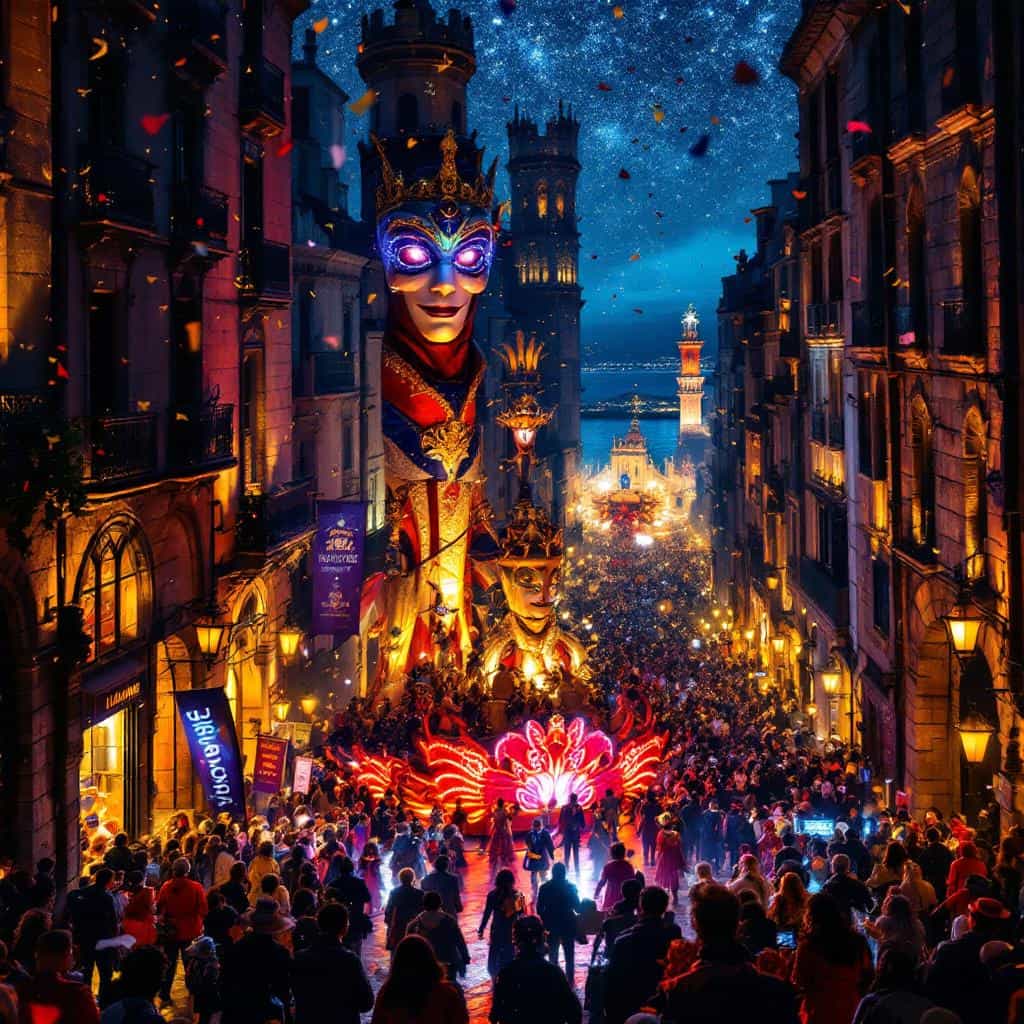
Barcelona Carnival 2026 is set to confirm something locals already suspect: Barcelona is no longer just a city with a carnival; it is becoming a carnival city. The 2026 edition, scheduled as always in the week leading up to Lent, is being framed by organizers as a “festival a tappe,” a multi‑stop, citywide route through the worlds of masks, satire, music and street theater that will criss‑cross neighborhoods from Ciutat Vella to Nou Barris. Municipal planners speak of this year as a stress test for a renewed model of urban celebration, one that tries to reconcile the city’s reputation for exuberant nightlife with growing concerns over tourism pressure and quality of life. At its core, Barcelona Carnival 2026 remains about masks, costumes and collective mischief, but the way these elements are distributed across space, time and digital platforms looks very different from just a decade ago. That tension between continuity and innovation runs through every major announcement, from the redesigned parades to a surprisingly ambitious program of sustainability and accessibility measures.
To understand how new some of these 2026 features are, it helps to recall how fragile the carnival tradition once was in Barcelona. Under the Franco dictatorship, public carnival celebrations were banned, and the masked figure of the Rei Carnestoltes, the Carnival King, survived more as a whispered memory than a visible presence. Only in the 1980s did the city start re‑embracing pre‑Lenten festivities, initially with modest neighborhood events and later with more official backing from the Ajuntament de Barcelona. Cultural historian Enric Ucelay‑Da Cal has often pointed out that in Catalonia, carnival is as much a political text as a festive occasion, a temporary inversion of hierarchies where the powerful are mocked from the safety of anonymity. That spirit is very much alive in 2026, but curated in a way that seeks to avoid the excesses of mass intoxication that once plagued the most crowded nights around La Rambla. City officials say they want a carnival that is “more theatrical than alcoholic,” more about creativity and critique than about simple binge tourism.
The first novelty that many visitors will notice in 2026 is the reimagined entry of Carnival into the city, the Arribo, which for decades has officially opened the festivities. Traditionally, Rei Carnestoltes would symbolically arrive at a central point, claiming temporary rule over order and morality. This year, organizers are splitting that entrance into a moving procession that begins at the Port Vell waterfront and snakes through the narrow streets of the Gothic Quarter before a theatrical proclamation in Plaça Sant Jaume. The route, designed as a literal and metaphorical journey from sea to city, pays homage to Barcelona’s maritime trading past, when carnival masks and imported fabrics arrived by ship from Venice and beyond. Theater director and 2026 artistic coordinator, Marta Galán, describes the new Arribo as “a floating parliament of fools,” in which masked performers on illuminated platforms debate the city’s most contentious topics — from housing costs to climate change — in sharply satirical speeches. She insists this is not just spectacle for tourists but a deliberate attempt to restore carnival’s function as a moment of sanctioned, humorous dissent.
Equally striking is the decision to frame the 2026 edition as a true “carnival in stages,” with official thematic routes across the city that encourage participants to move between different districts over several days. The old model concentrated most of the action around Ciutat Vella and Gràcia, inadvertently creating overcrowded hotspots and leaving outer neighborhoods feeling like spectators. In contrast, this year the Ajuntament is promoting three main axes: a Family and Tradition trail linking Sants, Sant Andreu and Horta; a Nightlife and Digital Culture route focusing on Poblenou, Raval and the seafront; and a Community Carnivals circuit through Nou Barris and Sant Martí, where smaller associations have historically organized processions with little media attention. Visitors can follow these paths through an interactive map on the official carnival app, which also includes a schedule of concerts, masquerade balls and children’s workshops at each stage. Urban sociologist Marina Subirats notes that this decentralization is part of a broader push to rebalance Barcelona’s cultural events, arguing that “a living city cannot celebrate only in its postcard districts.”
Beyond geography, one of the headline innovations for 2026 lies in how masks and costumes are being reinterpreted in an era of digital identities and social media filters. Rather than lamenting the competition from Instagram face filters, the city has commissioned a series of workshops and public installations exploring what it means to “wear another face” in 2026. The design school Elisava is leading a project called Mask Lab 4.0, where students and artisans team up to create hybrid masks that incorporate low‑tech LED elements, recycled plastics and traditional Catalan motifs such as giants, devils and the iconic sardine. Participants will be invited to scan QR codes on the masks to access short stories or satirical micro‑plays written specifically for carnival, blurring the line between physical disguise and digital narrative. Psychologist and media scholar José Luis Fontal argues that this approach cleverly reframes a contemporary concern — the fragmentation of identity in online spaces — within a very old ritual: “The mask has always allowed people to test versions of themselves they could not live out in daily life; the smartphone filter is just a new layer on that impulse, not its replacement.”
Central to the 2026 program is a renewed emphasis on Barcelona’s longstanding tradition of rua, the neighborhood parades that thread through streets like spontaneous, noisy veins of color. This year the city has formalized a multi‑stage structure for these parades, turning them into narrative journeys that unfold across different parts of the urban fabric. In Raval, for example, the procession will begin at the top of the neighborhood with a focus on origins and migrations, featuring floats that tell the intertwined histories of Andalusian, Pakistani and Filipino communities in the area. As the rua descends toward the sea, themes shift to the present tensions of gentrification and nightlife, with satirical performances about rising rents and tourist apartments. Each “stage” of the parade route has its own decor, soundtrack and style of dance, creating a sense of episodic storytelling reminiscent of medieval mystery plays. Historian Joan‑Lluís Marfany compares this to the itinerant medieval processions in Barcelona that once moved from one church square to another, each hosting a different scene of a biblical drama. “Only now,” he adds, “the sacred narrative has been swapped for the saga of urban life in the twenty‑first century.”
In Poblenou, traditionally associated with industry and, more recently, with the so‑called 22@ tech district, carnival organizers are experimenting with what they call the Night of Disguised Innovation. Here the multi‑stop format takes participants through old factory spaces, co‑working hubs and graffiti‑covered side streets in a curated bar and club route where each venue adopts a different masquerade theme. One club will lean into retro futurism with costumes inspired by 1980s visions of the year 2026, all chrome, neon and analog robots, while another celebrates “debugged capitalism,” inviting revelers to dress as cancelled startup slogans, broken apps or obsolete gadgets. The city stresses that this is not an endorsement of uncontrolled partying; participating venues sign a charter restricting over‑crowding and excessive noise at late hours. Tech entrepreneur and local nightlife investor Laia Pagès insists that linking innovation spaces with carnival might seem frivolous, but it reveals the district’s contradictions: “The same warehouses that once housed textile workers’ struggles now host hackathons and cocktail bars; carnival is the perfect time to address that irony with humor, instead of pretending it’s not there.”
Any discussion of Barcelona Carnival would be incomplete without the closing act: the Burial of the Sardine, the mock‑funeral that symbolically ends the season of excess and ushers in Lent. For 2026, the city is introducing a multi‑location version of this ritual, expanding beyond the classic seaside ceremony. One sardine procession will still march toward the beach, torches and lanterns illuminating a giant, cartoonish fish on a wheeled platform, but new satellite funerals will take place in inland neighborhoods, each adapting the ritual to local tastes. In Gràcia, known for its politically engaged residents and elaborate street decorations, the sardine effigy will be made from recycled cardboard collected during the festival, turning the funeral into a commentary on consumption and waste. Meanwhile in Nou Barris, community groups are planning a more intimate, quasi‑religious cortege with live acoustic music and readings about the history of carnival repression under authoritarian regimes. Anthropologist Carles Feixa views this diversification of the sardine rite as “a quiet revolution,” because it allows different communities to decide what, exactly, they are symbolically burying — be it gluttony, political apathy or simply the exhaustion of a week of nonstop celebration.
The sustainability agenda permeating Barcelona Carnival 2026 is more than a cosmetic exercise in green branding. Past events have attracted criticism for waste left on beaches and in historic plazas, as well as for the carbon footprint of thousands flying in for a few days of revelry. This year the Ajuntament has announced a series of measures, some modest but potentially impactful, to shift the balance. Single‑use plastics are being phased out at official events, replaced with reusable or compostable alternatives, while costume contests will include a special category for outfits made entirely from recycled materials. The metro and tram network will run extended hours on peak carnival nights, with discounted passes for attendees who register via the festival app and choose public transport over taxis or ride‑hail services. Environmental activist group Ecologistes en Acció, often critical of large urban festivals, has cautiously welcomed these steps while warning that “the most sustainable carnival is still one that does not depend on attracting unlimited visitors from abroad.” This highlights an ongoing debate in Barcelona: can the city promote itself as a global events capital and still claim alignment with climate commitments. For 2026, the compromise appears to be an emphasis on regional tourism and local participation, with marketing campaigns targeting Catalan and Spanish travelers more heavily than intercontinental tourists.
Another major strand of renewal in 2026 concerns inclusion and accessibility, both physical and cultural. Organizers have been explicit about moving beyond a narrow vision of carnival as a playground for young, able‑bodied partygoers concentrated in a few central streets. Several parades will now include quiet zones and viewing stages designed for people with reduced mobility or sensory sensitivities, and selected performances will feature live sign language interpretation. The city has also partnered with migrant associations and LGBTQ+ organizations to curate segments of the parade that showcase identities historically sidelined in official narratives. A drag king troupe has been invited to reinterpret the figure of Rei Carnestoltes as a gender‑fluid monarch, while a collective of West African drummers and dancers from the Besòs area will lead a procession that fuses Catalan and diaspora carnival traditions. Political scientist Sonia Andreu notes that this expansion of voices is not free of controversy, with some conservative commentators accusing the city of “over‑politicizing” a simple fiesta. Yet she counters that carnival has always been political in practice, a time when social masks drop precisely because we are wearing literal ones. The difference in 2026 is that the politics of representation are being stated openly rather than left to subtext.
All these changes inevitably raise the question of authenticity, a word often invoked in debates over Barcelona’s evolving identity. Some nostalgic residents lament what they perceive as the loss of a more spontaneous, chaotic carnival before smartphones and official branding, while others remember periods when the festivities were anemic and marginal. Sociologist Manuel Delgado has argued that “authenticity is the story a city tells itself about how it should feel,” and in this sense Barcelona Carnival 2026 is an attempt to rewrite that story for a metropolis facing twenty‑first‑century pressures. The multi‑stop, multi‑neighborhood structure can be read as a bet that the city’s soul lies not in a single postcard image of a crowded La Rambla but in the cumulative experiences of families in Sants, students in Raval, retirees in Horta and newcomers in Besòs, all taking part in the same ritual through different lenses. Whether the experiment succeeds will depend not just on attendance figures or social media metrics but on more invisible outcomes, such as whether children remember their first home‑made mask, or whether a jaded office worker finds, for one night, a sense of joyful anonymity in the crowd. In that regard, the 2026 edition is less a radical break than a complex negotiation between memory and innovation. It suggests that carnival in Barcelona is not a fixed tradition to be preserved behind glass, but a living, adaptive script rewritten every year on the city’s streets, one masked face at a time.
You may also like
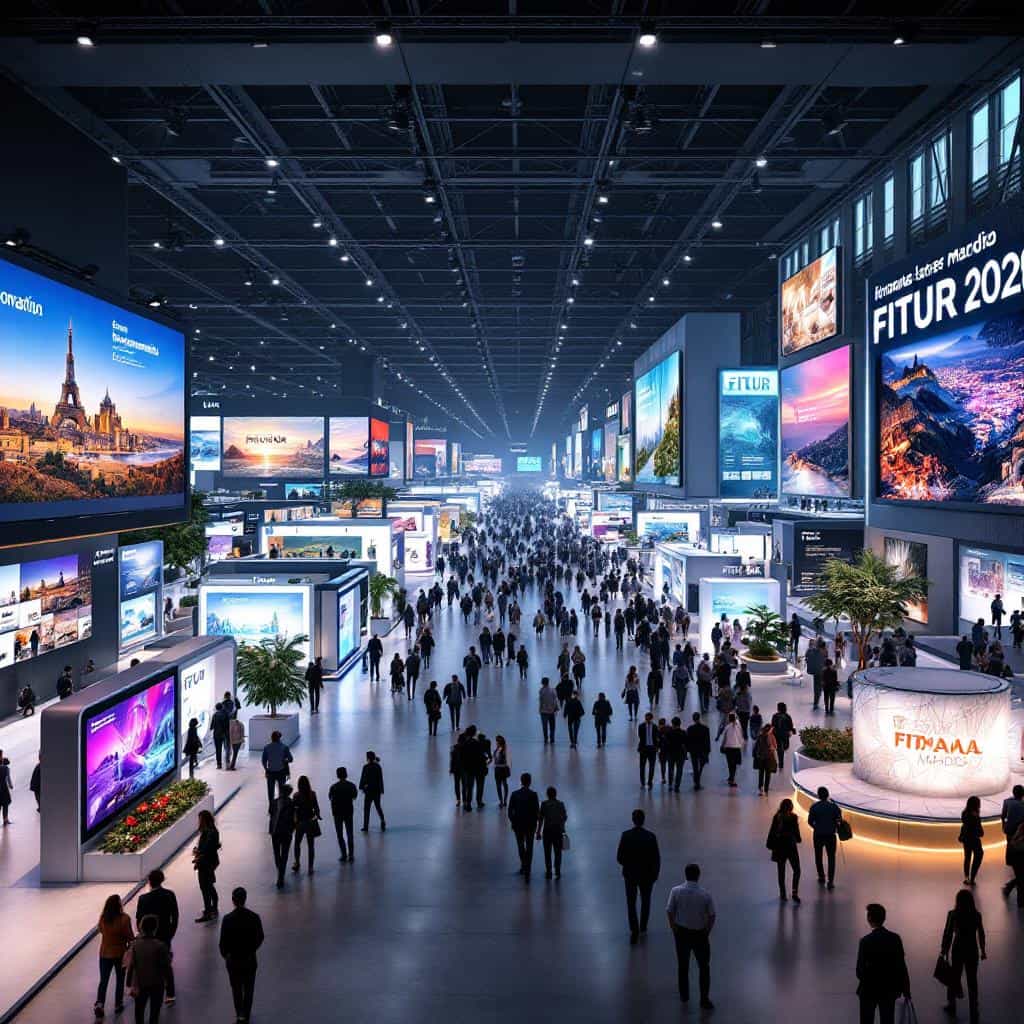
FITUR 2026 in Madrid: How the World’s Tourism Industry Reimagined Travel
From 21 to 25 January 2026, FITUR 2026 transformed Madrid’s IFEMA into the beating heart of global tourism, showcasing cutting‑edge technologies, regenerative travel models, AI‑powered personalization, climate‑smart destinations, and the rise of space and virtual tourism. The fair highlighted how the industry is pivoting from simple growth to resilient, inclusive and sustainable development, while Spain leveraged the event to reinforce its role as a world tourism powerhouse.
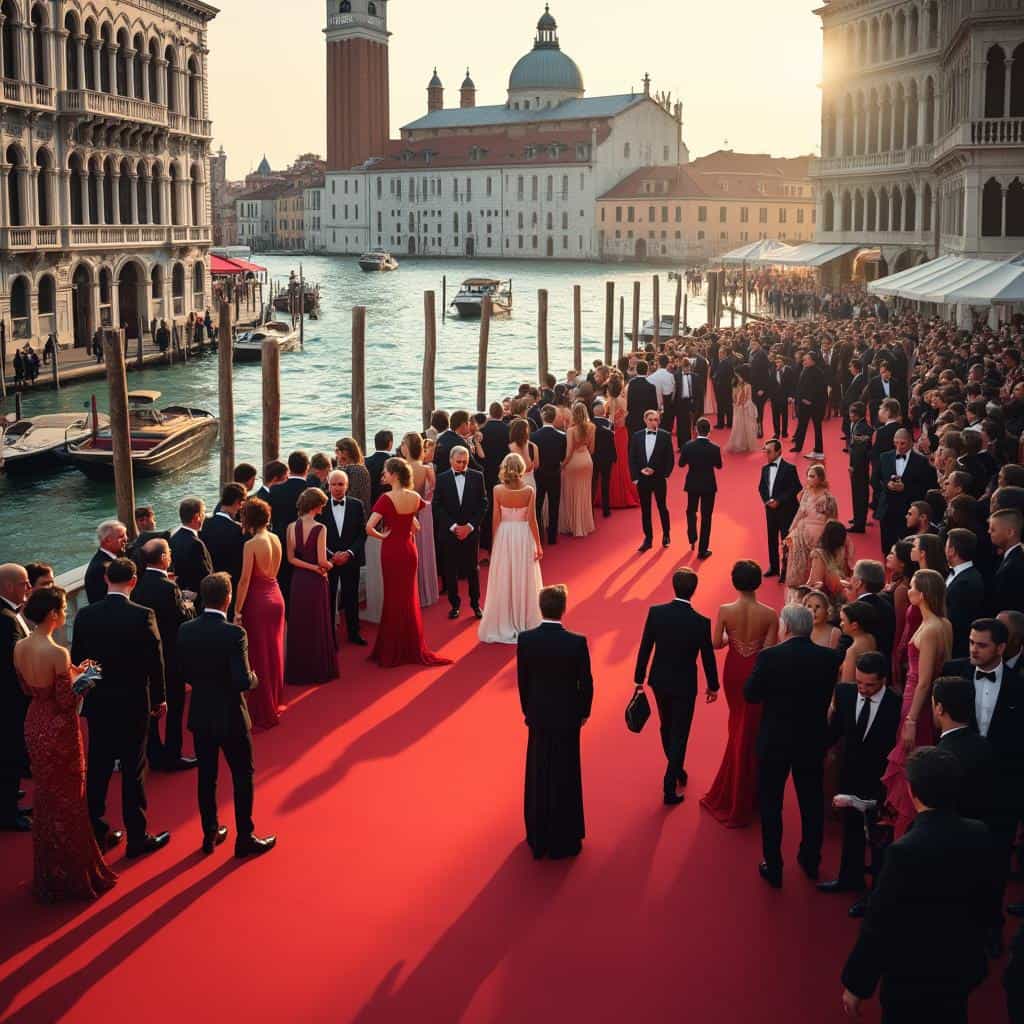
Venice Film Festival 2025: A Celebration of Cinematic Excellence
The Venice Film Festival 2025 dazzled attendees with a lineup of groundbreaking films, star-studded interviews, and prestigious awards, showcasing the very best of international cinema.

Unveiling the New Digital Networks Act: Benefits, Challenges, and Applicability
The recent introduction of the Digital Networks Act has sparked discussions in the tech and legislative communities. This comprehensive legislation aims to regulate digital infrastructures, enhance cybersecurity, and protect user data. However, its implementation is fraught with benefits, challenges, and varying levels of applicability across regions.

Turkmenistan Embraces Cryptocurrencies: A New Era of Digital Economy
In an unprecedented move, Turkmenistan has opened its doors to cryptocurrencies. This decision marks a significant shift in the nation’s economic strategy, offering numerous advantages but also posing potential challenges. This article explores the reasons behind Turkmenistan’s acceptance of digital currencies, the benefits it expects to reap, and the possible pitfalls it may encounter.
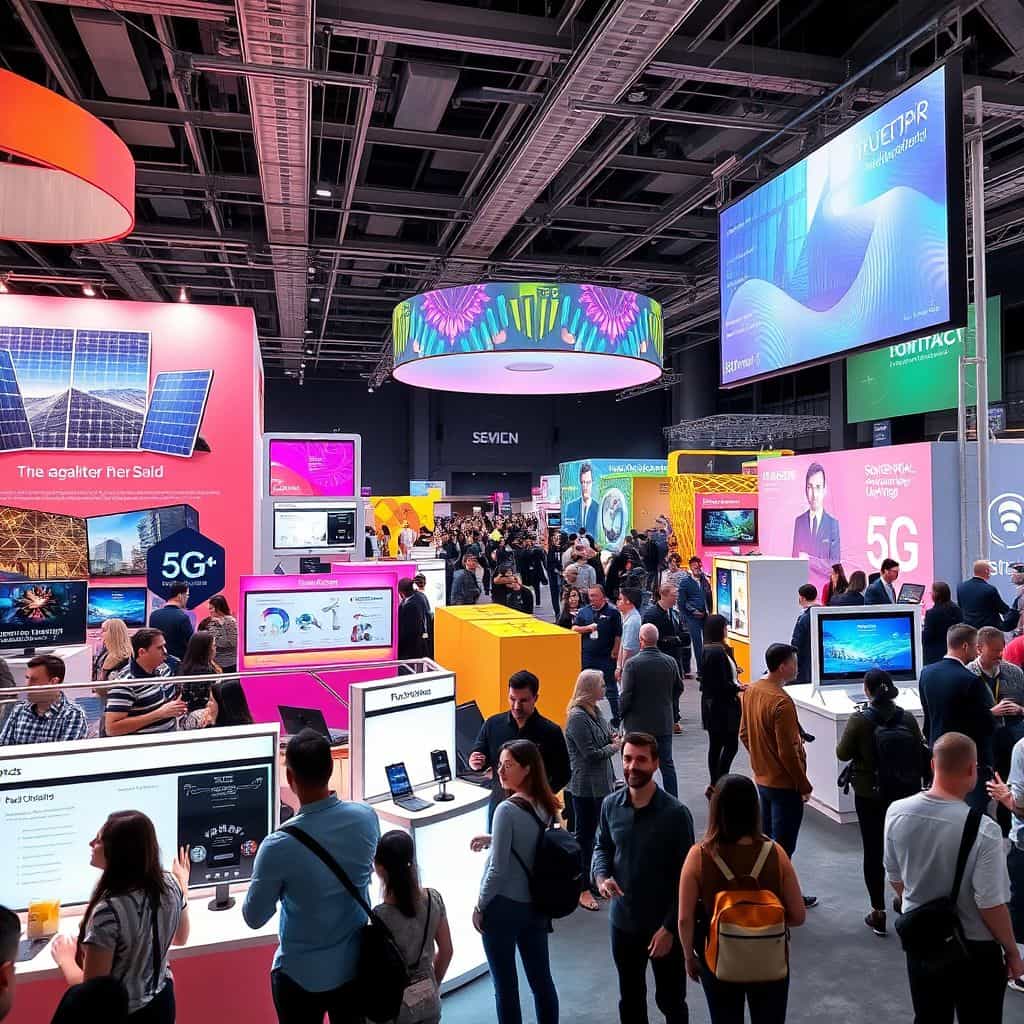
Matelec 2025: Illuminating the Future at the 23rd Edition of Madrid’s Premier Tech and Electrical Industry Fair
Matelec 2025, Madrid’s iconic fair, returns for its 23rd edition, showcasing groundbreaking innovations in technology, the electrical industry, telecommunications, and lighting. Key highlights include the latest in smart energy solutions, innovative lighting designs, and advanced telecommunications technologies.

Why Big Tech is Turning to Geothermal Energy to Power Data Centers
As the demand for digital services continues to grow, Big Tech companies are increasingly relying on geothermal energy to power their data centers. This shift is driven by the need for sustainable and reliable energy sources that can meet the high energy demands of these facilities.